
A setting that gets this right will:
- Communicate proactively: Families receive timely updates about their child’s progress, events, and any changes.
- Maintain consistency: All staff share the same messages, reducing confusion and building trust.
- Show empathy and respect: Tone and body language reflect care and professionalism in every interaction.
- Encourage two-way communication: Parents and carers feel heard and valued, not just informed.
- Use multiple channels effectively: Face-to-face, phone, email, and digital platforms are used appropriately.
- Model positive communication for children: Staff demonstrate listening, turn-taking, and clear expression.
- Handle sensitive issues with confidence: Difficult conversations are approached with clarity and compassion.
- Create a culture of openness: Staff feel safe to share ideas and concerns without fear of judgment.
“Communication works for those who work at it.” — John Powell
Intended Outcomes
By completing this course, participants will:
- Commit to continuous improvement through reflection and feedback.
- Recognize the impact of communication on relationships and outcomes for children.
- Understand the four competency levels and identify their current position.
- Develop strategies for improving clarity, tone, and consistency in all forms of communication.
- Apply best practices aligned with EYFS and Ofsted expectations.
- Build confidence in managing challenging conversations and delivering key messages.
Introduction
Communication is more than exchanging information, it’s about building trust, understanding, and collaboration. In early years settings, every interaction matters. Whether you’re greeting a parent, sharing a child’s achievement, or liaising with external professionals, your words and actions shape perceptions and relationships. This course will help you master the art of communication so that your setting thrives and children benefit from strong partnerships.
Task One – Where are you at right now?
Consider the four statements below, which one best reflects you? Discuss this with your colleagues too.
| Communication with all stakeholders is always caring, consistent, concise, and compelling. | Excellent communication in all forms with all stakeholders. | Communication is inconsistent and unclear at times. | Communication is rare and unclear. |
Why it matters?

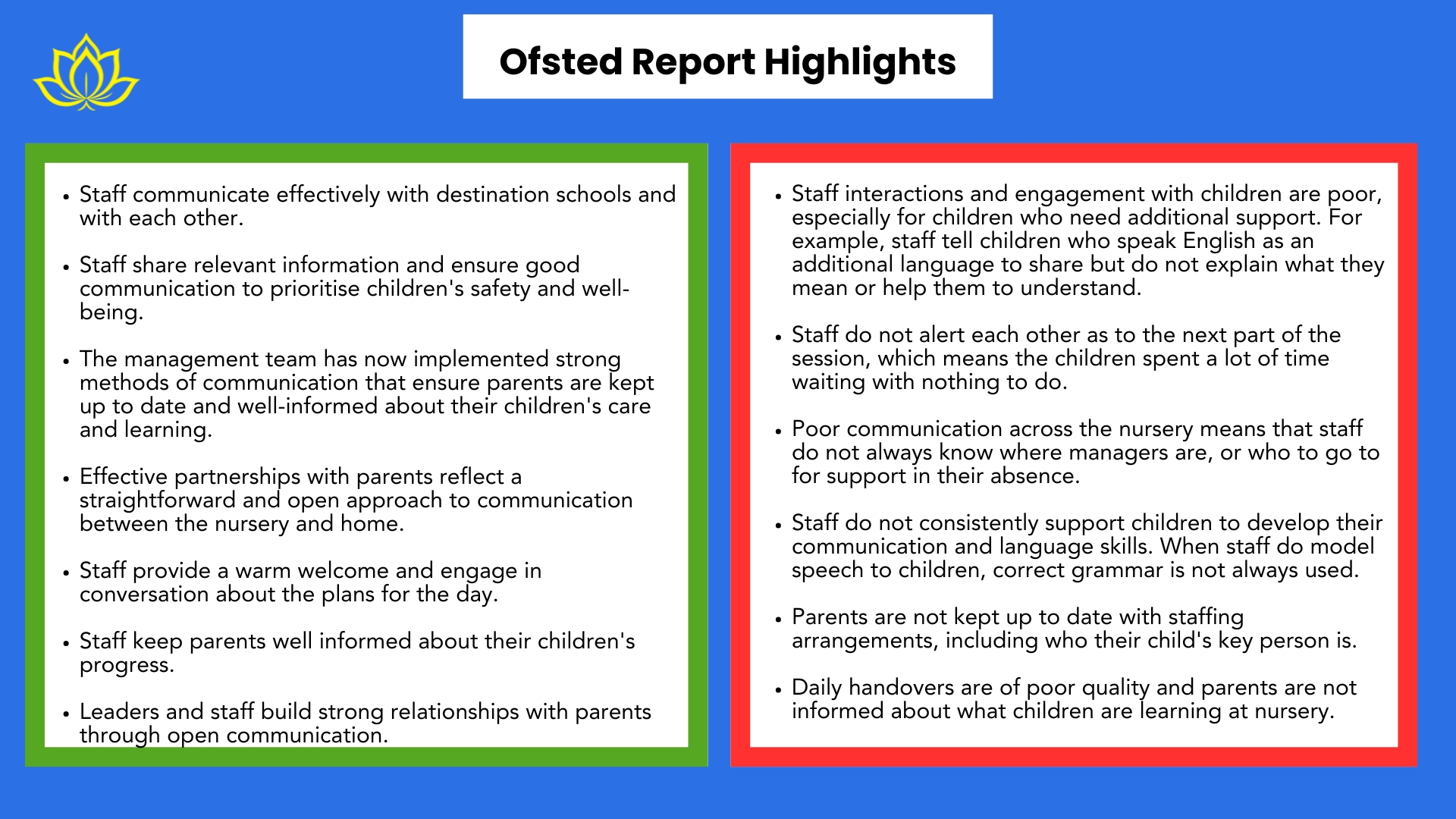
What does Ofsted and the EYFS say?
EYFS Statutory Framework:
- Requires providers to share information regularly with parents about their child’s progress.
- Emphasises partnership working with families and other professionals.
Ofsted Inspection Framework:
- Highlights the importance of information sharing for children with SEND or safeguarding concerns.
- Judges leadership and management partly on how well communication supports safeguarding and learning.
- Looks for evidence of clear, consistent, and respectful communication with parents and staff.
Ways to Help Develop General Communication
Task Two – Create Your Personal Communication Action Plan
Objective:
To apply the strategies discussed and commit to practical steps for improving communication in your setting.
Instructions:
- Reflect on the strategies from the previous section (e.g., active listening, clarity, consistency, empathy).
- Choose three strategies you will focus on over the next month.
- For each strategy:
- Write one specific action you will take (e.g., “I will summarise parent concerns before responding”).
- Identify when and how you will implement it (e.g., “During daily handovers”).
- Set a success measure for each action (e.g., “Parents confirm they feel heard” or “Fewer misunderstandings in team meetings”).
- Share your plan with a colleague or manager for feedback and accountability.
Discussion Prompt Extension:
“Which strategy do you think will have the biggest impact on our setting and why?”
Case Studies
Read through these case studies with colleagues and discuss the questions at the end of each.
Case Study 1: Excellent Communication in Action
Scenario: A parent expresses concern about their child’s speech development. The practitioner listens attentively, acknowledges the parent’s feelings, and explains the steps the setting will take, including observations and referrals if needed. They follow up with a written summary and invite the parent to share any home strategies.
Why It Works:
- Active listening and empathy build trust.
- Clear explanation of next steps reduces anxiety.
- Written follow-up ensures consistency and transparency.
Discussion Questions:
- What specific phrases or actions showed empathy?
- How did the practitioner ensure clarity and consistency?
- How could this approach be adapted for a family with limited English?
Case Study 2: Poor Communication and Its Impact
Scenario: A parent asks about their child’s progress during pick-up. The practitioner responds quickly: “They’re fine, nothing to worry about.” No examples or details are given. Later, the parent complains they feel uninformed and undervalued.
Impact:
- Parent feels dismissed and anxious.
- Missed opportunity to strengthen partnership.
- Risk of complaint or negative reputation.
Discussion Questions:
- What went wrong in this interaction?
- How could the practitioner have improved their response?
- What systems could prevent this from happening again?
Case Study 3: Communication Breakdown Between Staff
Scenario:
A manager emails staff about a new safeguarding procedure but uses jargon and assumes everyone understands. Some staff misinterpret the instructions, leading to inconsistent practice. During an inspection, Ofsted notes confusion among staff.
Why It Matters:
- Poor internal communication affects compliance and safeguarding.
- Lack of clarity creates stress and risk.
Discussion Questions:
- What role does feedback play in preventing this issue?
- What were the consequences of unclear communication?
- How could the manager have ensured understanding?
“The single biggest problem in communication is the illusion that it has taken place.” — George Bernard Shaw
GIST: Good ideas for starting things…
- Begin Every Interaction with Active Listening
- Why it works: People feel valued when they are truly heard.
- How to start:
- Make eye contact and avoid distractions (e.g., phones).
- Use phrases like “I understand” or “Tell me more” to show engagement.
- Quick tip: Before responding, summarise what the other person said in your own words to confirm understanding.
- Use the “Three Cs” Rule in Every Message: Caring, Clear, Concise
- Why it works: It ensures your tone is warm, your message is understandable, and you avoid unnecessary detail.
- How to start:
- Before sending an email or speaking, ask: Is this caring? Is it clear? Is it concise?
- Quick tip: Replace jargon with simple language and keep sentences short.
- End Conversations with a Confirmed Next Step
- Why it works: It prevents misunderstandings and builds trust.
- How to start:
- After explaining something, say: “Just to confirm, you’ll bring the form tomorrow, and I’ll email you the policy today.”
- Quick tip: Always check if the other person agrees and understands before ending the interaction.
Want to learn more?
- Book: “The Communication Friendly Spaces Approach” by Elizabeth Jarman
- Why it’s useful: Focuses on practical strategies for creating communication-friendly environments and improving interactions with children and families.
- Blog: Early Years Alliance – Connecting with words
- Why it’s useful: Offers articles, tips, and guidance on supporting communication development in early years settings.
- Video: “The Importance of Communication in Early Years” (YouTube)
- Why it’s useful: Short, engaging video explaining why communication matters and how practitioners can improve their skills.